The forest keeps its own schedule, and it was set long before anyone thought about ticket sales. Before you choose a date, the wood has already decided how much light you will get, how far sound will carry, whether the ground will hold an audience, and what colour everything will be. A seasonal calendar is simply a way of listening to that schedule instead of arguing with it. It saves you from the two most common open-air mistakes: staging a delicate dusk piece in a month with no real dusk, and rehearsing on ground that turns to porridge after two days of rain. What follows is a working year for forest theatre — the themes worth chasing, the weather to plan around, the daylight windows to protect, and the natural events that will do half your production design if you let them.
Spring: Mud, Birdsong and Fast-Changing Light
Spring is the season of enormous sound and unreliable ground. The birdsong window before full leaf-out is the loudest the wood will be all year, and it is also your best acoustic: bare branches let sound move, where a closed canopy will swallow it. Build that into the piece. A dawn chorus performance, a waking-up story, a procession that follows the first green — all sit naturally here.
The catch is water. March and April ground is at its wettest, and a route that looks firm in rehearsal can be unwalkable with forty people on it. Favour paths, meadow edges and boardwalk. Tell your audience to wear boots, and mean it. Evenings still fall away quickly in early spring, so book a start time that leaves you at least forty minutes of usable light at the end, and rehearse in the cold so nobody discovers on opening night that their fingers do not work.
Summer: Long Light and Small Irritations
Summer gives you the long blue hour, and it is worth building a show around. Lanterns and hand-held lights can enter late and stay low, and a promenade that moves from daylight into dusk feels like an event rather than a walk. Themes of abundance, shade, mistaken identity and midsummer confusion fit the season comfortably.
Two practical warnings. First, the wood is darker under full leaf than you expect in the middle of the day — check your playing space at the exact hour of the show, not at noon. Second, still, warm evenings belong to midges and mosquitoes. A breezy clearing is worth ten metres of extra walk. Choose matinees for family audiences and keep evening performances shorter than you would indoors; standing in heat tires people faster than they admit. If the summer has been dry, ask the landowner about fire restrictions before anyone lights so much as a candle.
Autumn: The Forest Does Your Design
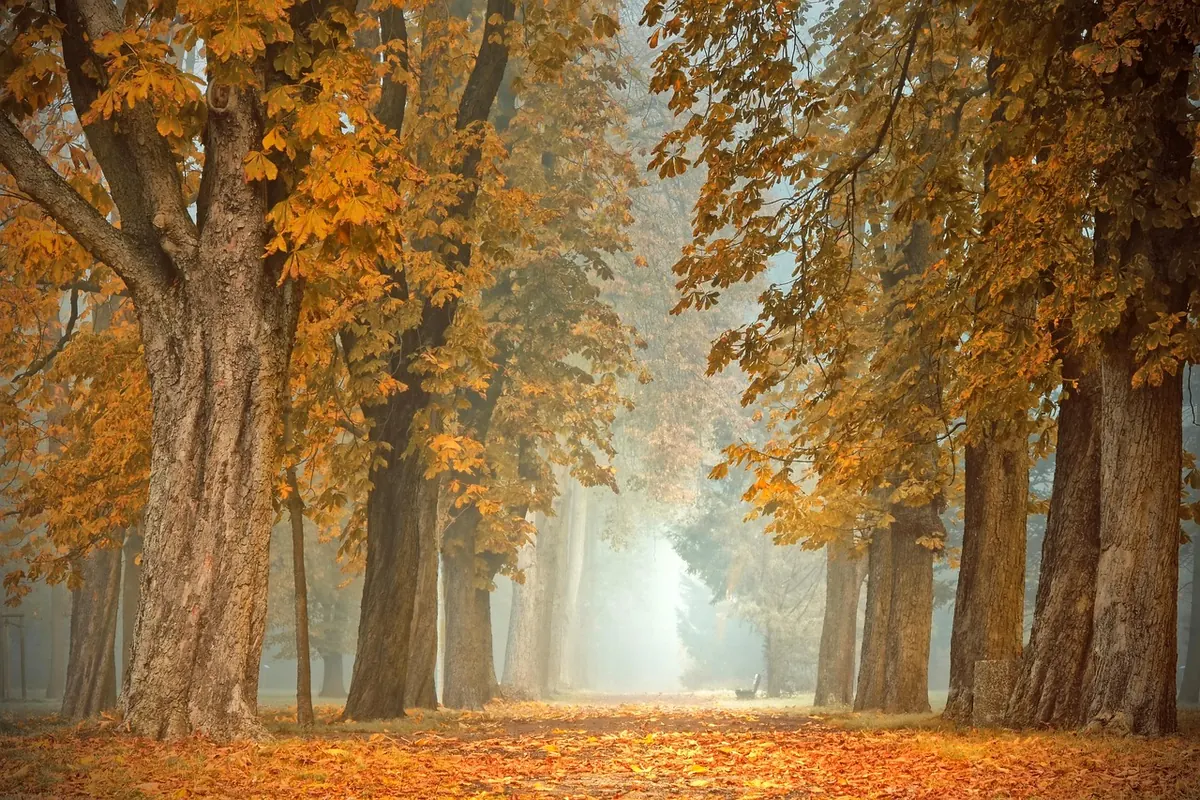
Autumn is the generous season. Leaf fall gives you confetti, sound and a shifting floor for free, and the palette is so strong that costumes need only contrast with it — deep blues, greens and off-whites read far better against rust and gold than anything ochre. Stories of harvest, masks, memory and gentle haunting belong here.
The leaf-fall window
Leaf fall is short and site-specific. Watch your wood for a week in advance and note which trees turn first; a show programmed to the beech drop will be very different from one programmed to the oaks a fortnight later. If you want leaves on the ground, go early. If you want the bare structure of branches visible, go late.
Wind, wet leaves and the site check
When the clocks go back in late October, evening light disappears before most people finish work. Either move performances to the afternoon or commit to darkness and light the trees deliberately. After any windy night, walk the route before the audience arrives and look up as well as down — dead limbs are the quiet hazard of the season. Wet leaves on a slope are genuinely slippery, so rope off the tempting shortcut.
Winter: Small Casts, Sharp Air, Careful Fires
Winter strips the wood back to its architecture, and that is the point. With no canopy, light reaches the floor and sound travels further than you think; a voice at one end of a clearing can carry to the car park. Test it before you assume the space is intimate. Frost, stillness and midwinter storytelling suit small casts in small clearings far better than large productions. A short mumming, a tale told in the round, a procession of lanterns at the turn of the year.
Cold is the real production constraint. Audiences tolerate cold for roughly an hour and then stop listening, so keep winter shows to forty-five to sixty minutes and give people something to do with their hands — warm drinks, blankets, a walk between scenes. Fire only with explicit permission, a clear plan for wind and water, and never in dry conditions. And do not overlook the winter matinee: a two o'clock start in December, with the low sun coming through bare trees, can be more atmospheric than anything you could light after dark.
Six Checks Before You Confirm Any Date
Whatever the season, the same questions decide whether a date is workable. Run through them before you announce anything.
- Daylight: note sunrise and sunset for that exact week, then subtract an hour for setup and thirty minutes for the audience to leave safely.
- Ground: walk the route after rain, not before. Identify the two places you would not want to send a wheelchair or a grandparent.
- Sound: test a line at the back of the space in the same foliage conditions as the show. Leaf cover changes everything.
- Insects and plants: know your nettle patches, tick country and sting season, and brief the company honestly.
- Permission: confirm access, audience numbers, vehicle parking, toilet arrangements and any woodland management work with the owner or manager in writing.
- Weather plan: name the person who cancels, the time they decide, and how ticket-holders hear about it. Ambiguity here is what turns a wet evening into a complaint.
Book the Wood First, the Show Second
Most forest theatre problems are scheduling problems in disguise. Pick the weeks when the site works — when the ground is dry, the light lasts, the insects are bearable and the leaves are doing something interesting — and only then choose the play that fits. Keep a simple year planner with your daylight windows and known nature events marked on it, and add to it after every production with a note on what the weather actually did. After two or three years you will have something better than a calendar: a record of how your particular wood behaves, season by season. That is the document that will make the next show easier.
Photo: Peggychoucair / Pixabay